

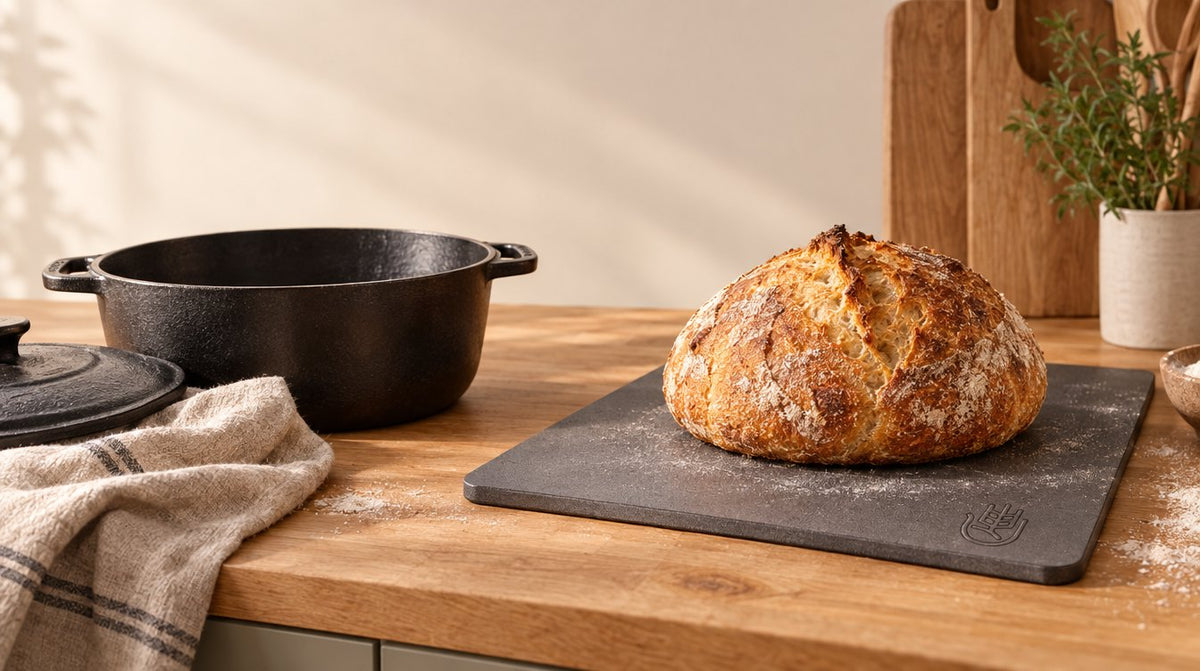
A sourdough loaf needs two things in the oven: strong heat from below and steam at the start. A Dutch oven and a baking steel can both give you that, but they do it in different ways. So the right choice mostly comes down to how far along you are with your baking, and which loaves you want to bake.
Here we go through what happens in the oven, what each option is good at, and how to bake with steam on a baking steel.
Dutch oven or baking steel in 10 seconds
- Preheating45-60 minutes
- Steam phaseThe first 15-20 minutes
- Dutch ovenEasiest when you are new
- Baking steelMost bottom heat, free shape
First: the oven has to be properly hot
Whatever you bake in, baking starts 45-60 minutes before the loaf goes in. The oven reaches the temperature you set quickly, but that is only the air. The metal in a pot or a steel has far more mass and needs much longer to soak up the heat and hold it steady.
Preheat too briefly and the dough lands on a surface that is not hot enough. The early oven spring never comes, and the loaf ends up low.
Many home ovens also show the wrong number. The dial says 250 °C, but inside the oven it can easily be 220 °C or 230 °C.
Get an oven thermometer. It costs under 200 DKK and shows the actual temperature. If your oven runs 20 °C cold, just set it 20 °C higher.
Two phases: steam first, then colour
Every sourdough loaf bakes in two phases, and this is where a Dutch oven and a baking steel work differently.
The steam phase is the first 15-20 minutes. Steam keeps the crust soft and flexible while the loaf springs up. The yeast is at its peak, CO2 expands in the heat, and most of the oven spring happens here. If the crust sets too early, it acts like a jacket that is too tight. It holds the loaf back, and you get a dense, low bread without a nice ear.
The crust phase starts when the steam is removed. Now the dry heat of the oven works freely. The Maillard reaction between amino acids and sugars gives the crust its deep brown colour and hundreds of flavour compounds, and caramelisation adds sweetness to the outermost layer. The darker the crust, the more flavour.
A pale crust is not a careful choice. It is a loaf that was not allowed to finish.
Dutch oven: the easy route
A cast iron pot with a lid is the easiest route to a good loaf at home. The lid creates the steam phase all by itself. You do not have to think about it. The pot preheats with the oven and holds the heat steady while the bread bakes.
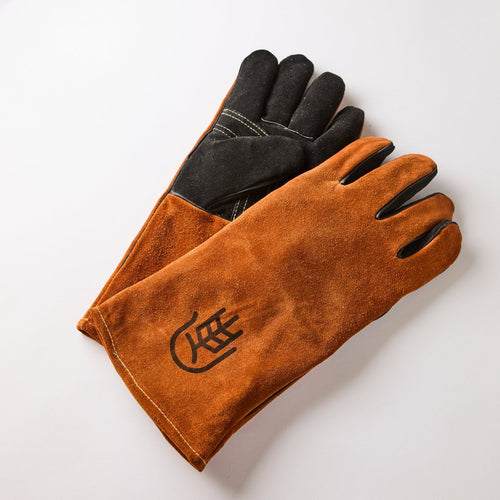
The downside is the shape. Most Dutch ovens are round, so you are limited to a round boule. They are also heavy, and you notice that when you lift a scorching hot pot wearing oven gloves.
Always preheat the pot with the oven. A cold pot will not give you the oven spring you are after.
Baking steel: most bottom heat and free shape
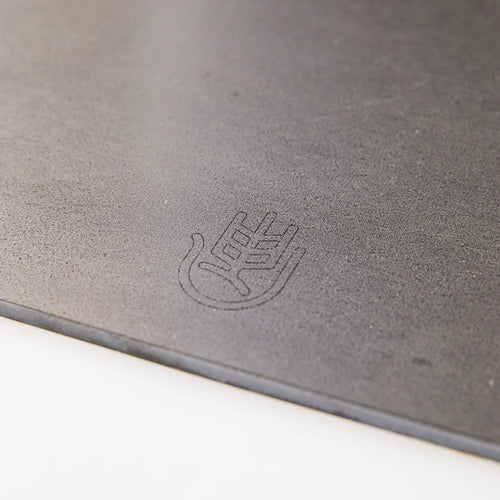
Steel absorbs and releases heat faster than ceramic or stone. When the dough hits a fully heated baking steel, it gets a strong push from below straight away. That gives a more dramatic oven spring and a crispier bottom. A baking steel is the closest you get to a professional stone oven at home.
In return, you make the steam yourself. You do that with a roasting tin of boiling water on the oven floor for the first 15 minutes. It takes a little more attention, but you get a large, flat baking surface with no lid and no walls. Here you can bake batards, baguettes and focaccia in exactly the shape you want.
When you are ready for that step, you will find our baking steel in the shop.
Comparison
| Dutch oven | Baking steel | |
|---|---|---|
| Preheating | 45-60 minutes with the oven | 45-60 minutes with the oven |
| Steam | Happens by itself under the lid | You make it with boiling water in a roasting tin |
| Bottom heat | Steady | Strongest, more oven spring and a crispier bottom |
| Loaf shape | Round boule | Batards, baguettes, focaccia and boules |
| Handling | Heavy pot you lift while hot | The steel stays in the oven, the loaf slides in |
| Best for | You, if you are new to sourdough | You, once the technique is in place |
Our advice is to start with a Dutch oven and switch to a baking steel once the technique is in place. If you have already baked a fair number of loaves and want more oven spring or other shapes, the steel is the natural next step.
How to bake on a baking steel with steam
- Put the baking steel in the oven and preheat for 45-60 minutes. Check the temperature with an oven thermometer.
- Get the steam ready. Boil water and have a roasting tin ready for the oven floor.
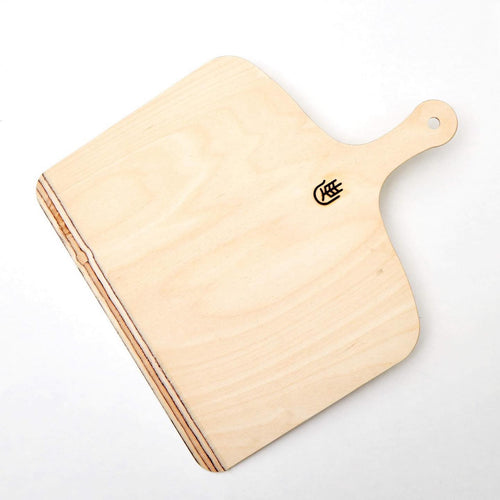
- Take the dough straight from the fridge and turn it out onto a peel. Cold dough is firm and easier to score.
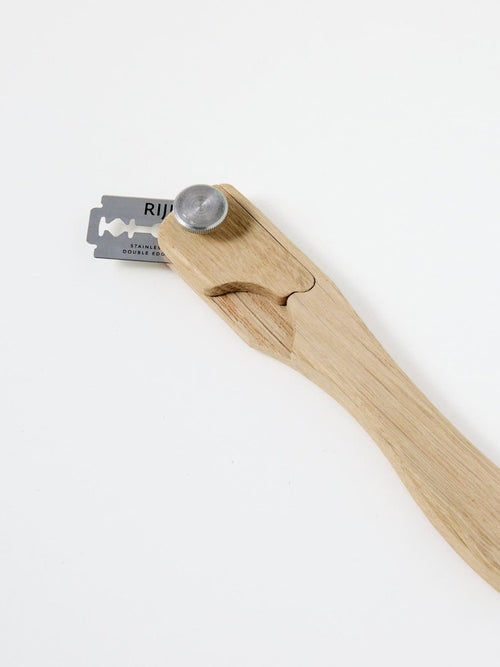
- Score the loaf with the lame at a 30-45 degree angle and about 1 cm deep. One calm stroke.
- Slide the loaf onto the steel, place the roasting tin with boiling water on the oven floor, and close the door quickly.
- Bake with steam for 15-20 minutes, and keep the oven door closed.
- Remove the roasting tin and keep baking until the crust is dark and caramelised.
Leave the oven alone during the steam phase. Every time you open it, the steam escapes and slows the oven spring. That goes for the oven door and for the lid on a Dutch oven.
When is the bread done?
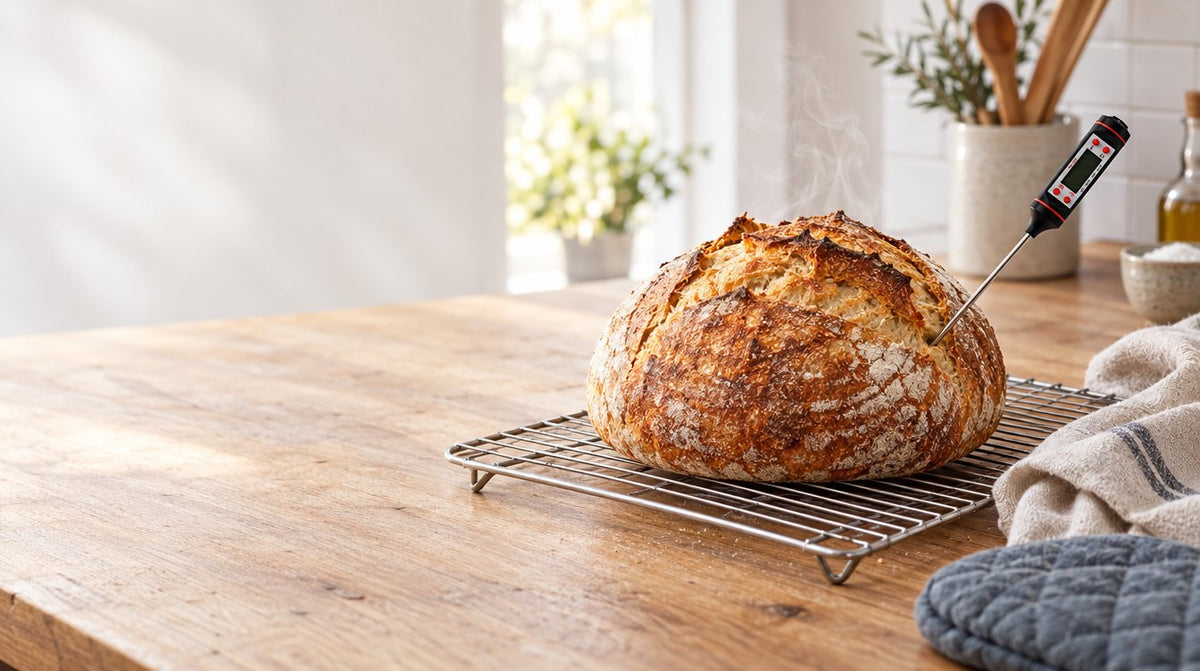
On a steel or in a pot, the rule is the same: a finished sourdough loaf is dark, and inside it should reach 96-98 °C. We go into colour and temperature in detail in When is sourdough bread done?
Frequently asked questions
Can you bake on a baking steel without steam?
The loaf will bake, but the crust sets too early and holds back the oven spring. The result is a lower, denser loaf without a nice ear. Use boiling water in a roasting tin for the first 15 minutes.
Does a baking steel need as long to preheat as a Dutch oven?
Yes. Both need 45-60 minutes with the oven. The air heats up quickly, but the metal needs time to reach the temperature and hold it.
Which loaves suit a baking steel best?
All the loaves that do not fit in a round pot: batards, baguettes and focaccia. You can of course also bake a round boule on the steel.
When should you switch from a Dutch oven to a baking steel?
When the technique is in place and you have baked some good loaves in the pot. Then you are ready to handle the steam yourself and make the most of the extra bottom heat.
Heat the oven properly. Give the loaf steam. The steel does the rest.
Peter and Anne Sofie, Simpel Surdej
Share on socials:
Do You Need a Proofing Basket? (And Which One to Choose)
When Is Sourdough Bread Done? Temperature, Colour and Cooling