A sourdough loaf can look done long before it is done. The crust is brown, the smell fills the kitchen, and everything in you says it is time. But what decides it happens inside the crumb, where you cannot see it. Here we show you how to know the bread is fully baked, and why it is still not ready when it comes out of the oven.
Done bread in 10 seconds
- Sourdough bread96-98 °C inside
- Rye bread98 °C inside
- ColourDark and caramelised
- Before you sliceAt least 60 minutes on a rack
What happens inside the bread?
Baking is a series of chemical and physical events that come in a fixed order, controlled by the temperature inside the dough. At 55-60 °C the yeast and lactic acid bacteria die, and the oven spring stops. From 60-70 °C the gluten network releases the water it has been holding. The starch soaks up that water and gelatinises, and the crumb starts to set.
At 80-90 °C gelatinisation is complete. From 90 °C and up, water evaporates out of the bread and the crust takes on colour. That is why the internal temperature is the safest measure. It tells you how far the starch has come.
| Internal temperature | What happens in the bread | Ready? |
|---|---|---|
| 55-60 °C | Yeast and lactic acid bacteria die. Oven spring is over. | No |
| 60-70 °C | The starch absorbs water and gelatinises. The crumb starts to set. | No |
| 80-90 °C | Gelatinisation is complete. The crumb sets fully. | No |
| 90-100 °C | Water evaporates out of the bread, and the crust takes on colour. | Almost |
| 96-98 °C | The sourdough loaf is baked through. | Yes |
| 98 °C | The rye bread is baked through. | Yes |
Temperature: the reliable method
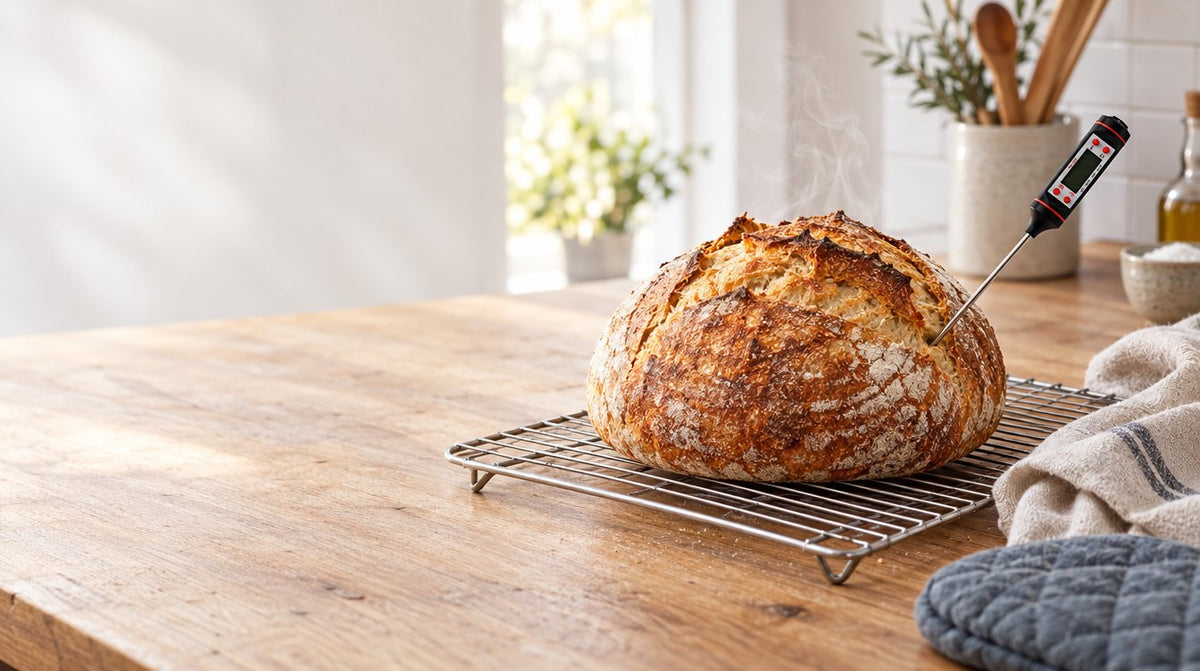
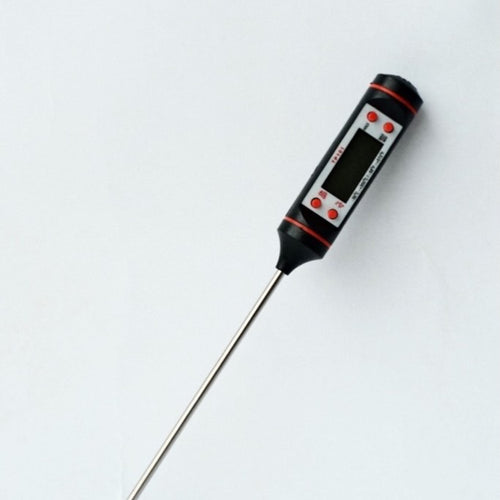
Push a thermometer in from the side or the bottom of the loaf. When it reads 96-98 °C, the bread is done, whatever the colour says. It is the most precise method we know, and it removes all doubt. We use a bread thermometer for every single loaf.
Take the bread out too early and you get a gummy, underbaked crumb. The fermentation may have been perfectly fine. The starch simply never finished gelatinising.
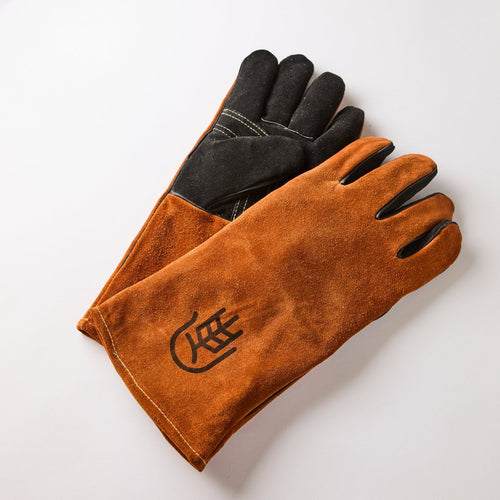
- Take the bread out with oven gloves and set it on a rack or a board.
- Insert the thermometer from the side or the bottom, so you do not make a hole in the top crust.
- Guide the tip to the centre of the crumb. That is where the bread is coolest and finishes last.
- Read the temperature. Sourdough bread needs 96-98 °C, rye bread 98 °C.
- If it is too low, put the bread back in the oven for a few minutes and measure again.
Check your oven. Most home ovens show a different temperature from the one they actually hold. If the dial says 250 °C, it can easily be 220-230 °C inside. An oven thermometer shows you how much to compensate.
Colour: darker than you think
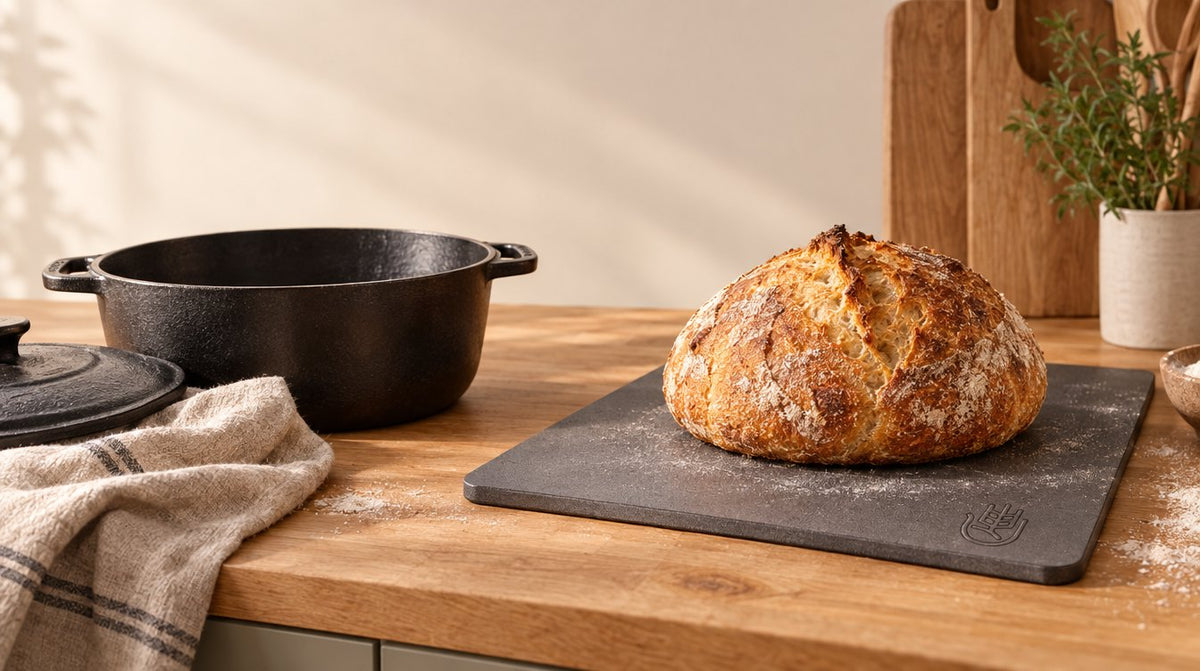
When the lid comes off after a 15-20 minute steam phase, the dry heat of the oven gets to work. From 100 °C and up in the crust, the Maillard reaction kicks in. Amino acids and sugars react and form hundreds of flavour compounds. At 175-230 °C caramelisation joins in and adds sweetness and depth. Read more about the steam phase with a lid or a tray of water in Dutch oven or baking steel.
A finished sourdough loaf is therefore dark. Not lightly golden. Many people take the bread out because it looks dark enough, and it rarely is. The darker the crust, the more flavour and the crisper the bite.
A pale crust is not a careful choice. It is a loaf that was not allowed to finish.
Sound: a good sign
Turn the loaf over and tap the bottom lightly. If it sounds hollow, that is a good sign. The sound just does not tell you anything precise about how far the crumb has come. Use it as an extra check together with the colour, not instead of the thermometer.
Hollow is good. But a thermometer never lies.
Why you have to wait before slicing
Baking is not over when the bread leaves the oven. Over the next 60-90 minutes, the starch in the crumb changes from a loose, gel-like structure into a firmer, crystalline form. That process gives the crumb its final texture, and it is what lets you cut a clean slice without the crumb being squashed under the knife.
Slice too early and you do not ruin the bread. You just get a gummy, moist crumb that sticks to the knife, because the starch has not set yet.
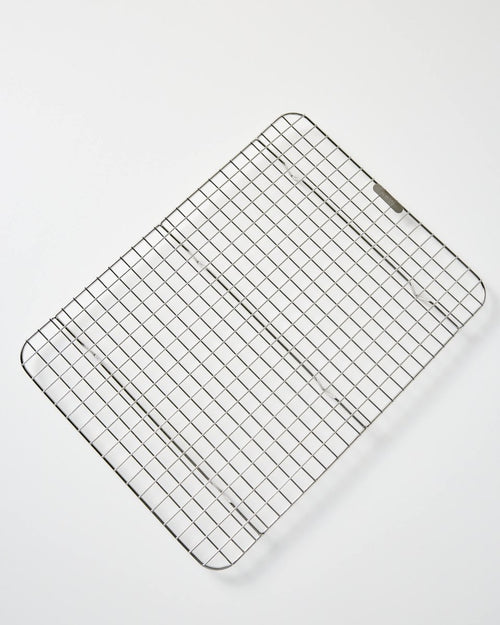
Put the loaf on a cooling rack, so air can reach all of it, including the bottom. A sourdough loaf deserves 60 minutes on the rack. It took a day to make. Give it an hour to finish.
Rye bread must cool completely. It sets and becomes both easier to slice and better in flavour 1-2 days after baking. Hard to wait for, but worth it.
The flavour gets better the next day
The flavour improves over the first 12-24 hours after baking. The sourness rounds off, the aromas settle, and the crumb becomes more stable. Store the bread wrapped in a cloth or linen at room temperature. Plastic makes the crust soft and chewy within a few hours, while a cloth keeps it crisp for 1-2 days.
Frequently asked questions
How hot should a sourdough loaf be inside?
96-98 °C, measured from the side or the bottom of the loaf. Rye bread needs to reach 98 °C.
What if the crust is dark but the temperature is too low?
Then the bread is not done. Temperature outweighs colour. Put the bread back in the oven and measure again after a few minutes.
Why is the crumb gummy when the bread is fully baked?
Most often because the bread was sliced too early. The starch needs 60-90 minutes to set. If a rye bread is gummy and rubbery, it may not have reached 98 °C inside, or the sourdough was not sour enough.
How long should bread cool before slicing?
At least 60 minutes for a sourdough loaf. Rye bread must cool completely, and it is at its best 1-2 days after baking.
Measure the temperature. Let the colour go dark. And give the bread its last hour on the rack.
Peter and Anne Sofie, Simpel Surdej
Share on socials:
Dutch Oven or Baking Steel? How to Choose for Sourdough