


Want to bake authentic Italian treats like Panettone, Brioche, Pandoro, or Colomba without commercial yeast? The secret lies in a healthy and vibrant Pasta Madre! This guide, adapted from our "Panettone and Pasta Madre" e-book, shows you how to convert your liquid sourdough starter into a dry starter (Pasta Madre) for optimal results.
In short
- Hydration43-45%
- Conversion3 feedings, every 18-24 hours
- Feeding100 g starter, 100 g flour, 45 g water
- Temperature16-18°C overnight
What is Pasta Madre?
Pasta Madre is an Italian term for a stiff sourdough starter with 30-50% hydration. For baking delicate treats like Panettone, we recommend a Pasta Madre at 43-45% hydration, which differs from the 100% hydration of liquid sourdough used for regular bread baking.
Why Pasta Madre for Panettone?
A properly prepared Pasta Madre is crucial for achieving the desired leavening and structure in sourdough Panettone, Brioche, Pandoro, and Colomba. It provides the necessary strength and stability for these rich, delicate doughs.
The Conversion Process (Liquid to Dry Starter)
If you don't have a Pasta Madre yet, you can convert your existing liquid sourdough. This process takes a few days, so plan accordingly.
Choosing the Right Flour
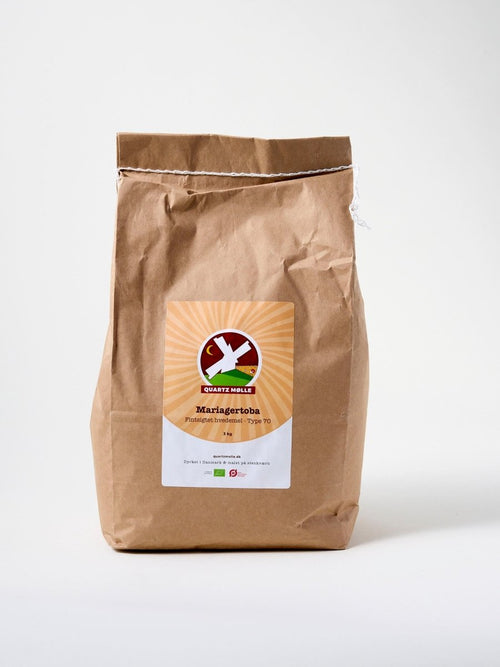
For feeding and strengthening your sourdough, we recommend a strong flour with a W rating of +W300, such as our Mariagertoba:
Quartz Mølle Mariagertoba Wheat BIO T70 fine sifted 3kg
Using a high-quality flour is essential for a velvety final product.
Step-by-Step Conversion
The key to a successful conversion is gradually reducing the hydration over three feedings, every 18-24 hours. This encourages a balanced bacterial flora in your starter.
- Feeding 1: Aim for approximately 65% hydration.
- Feeding 2: Reduce to around 55% hydration.
- Feeding 3: Reach your target of 45% hydration.
Feeding Ratio and Method
The feeding ratio for maintaining your Pasta Madre at 45% hydration is:
(1 part sourdough: 1 part flour: 45% water) or (100g sourdough: 100g flour: 45g water)
- Mix the ingredients in a stand mixer using the dough hook attachment.
- Roll the dough out with a rolling pin.
- Shape the dough into a "snail" and place it in a container.
- Leave the Pasta Madre uncovered at room temperature (16-18°C) overnight.
Next Steps
Once your Pasta Madre is ready, you can move on to the next stage, which involves the feeding cycle and preparation before mixing your first dough. Learn more in our "Panettone and Pasta Madre" e-book!
References

Del på sociale medier:
How We Choose Our Flour for Perfect Sourdough: Quality from Soil to Loaf
How to Remove Rust from Your Baking Steel
1 comment
Hello,
Your baking steel sounds great. I’m tired of dealing with a heavy dutch oven. Do you know of any cases where the steel has warped? How high a temperature can it sustain? I’m rather clumsy and wouldn’t want to damage this beautiful piece of equipment.
Thanks